

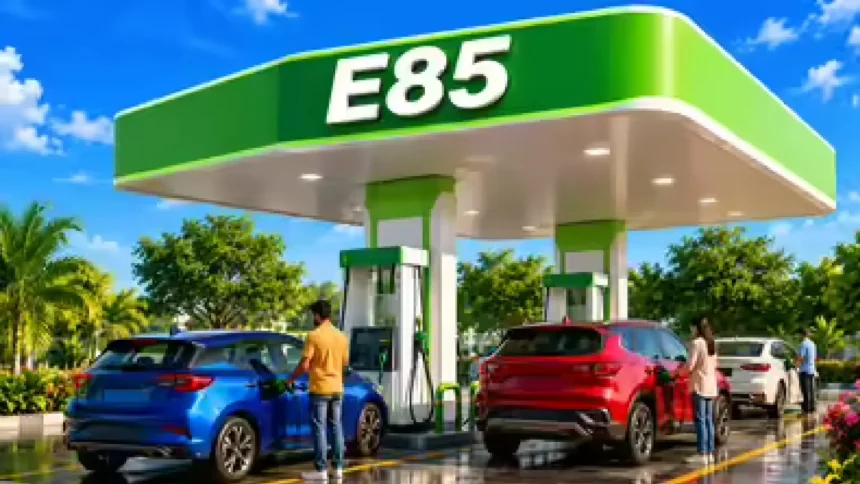
E85 fuel with 85% ethanol mix has been officially launched in Delhi. Union Petroleum and Natural Gas Minister Hardeep Singh Puri inaugurated Delhi’s first E85 fuel dispensing station at the Pusa Road outlet of Indian Oil (IOC).
The special thing is that it is ₹20 per liter cheaper than petrol. This will not only reduce the driving expenses of the common man but will also reduce the country’s dependence on crude oil imports.
The price of E85 fuel in Delhi has been fixed at ₹82.12 per liter. This is a full ₹20 less than the regular E20 petrol sold in Delhi. To avoid any confusion among customers at petrol pumps, machines (dispensers) dispensing E85 fuel will be branded with a distinct and clearly visible label.
500 pumps will open this year, target is 5000 by 2027
This station, located on Pusa Road in Delhi, is the country’s first, but the government plans to expand it to a much larger scale. In the initial phase, the government will establish approximately 50 to 100 such E85 fuel stations in Delhi-NCR and the Mumbai-Pune-Nagpur corridor.
According to the plan, the network of such stations will be expanded to approximately 500 by the end of this year. The central government aims to have approximately 5,000 outlets in all major cities by the end of 2027. The government also recently notified fuel standards with higher ethanol blends, such as E22, E25, E27, and E30.
What’s special about E85 flex fuel?
Currently, the petrol available at fuel stations across the country is E20, which means it contains a mix of 20% ethanol and 80% petrol. In contrast, the new E85 fuel contains up to 85% ethanol and only 15% petrol. The government wants to move towards flex fuels like E100, or 100% ethanol, to reduce crude oil imports.
Since the outbreak of war in the Middle East on February 28th, crude oil prices have risen from $70 to over $100 per barrel, sharply increasing India’s import bill.
Ethanol is produced from agricultural products such as sugarcane juice, corn, and rotten grains, making it low-cost. This makes it very cost-effective for consumers, provided they have vehicles that support this fuel. This fuel does not emit carbon into the air.