

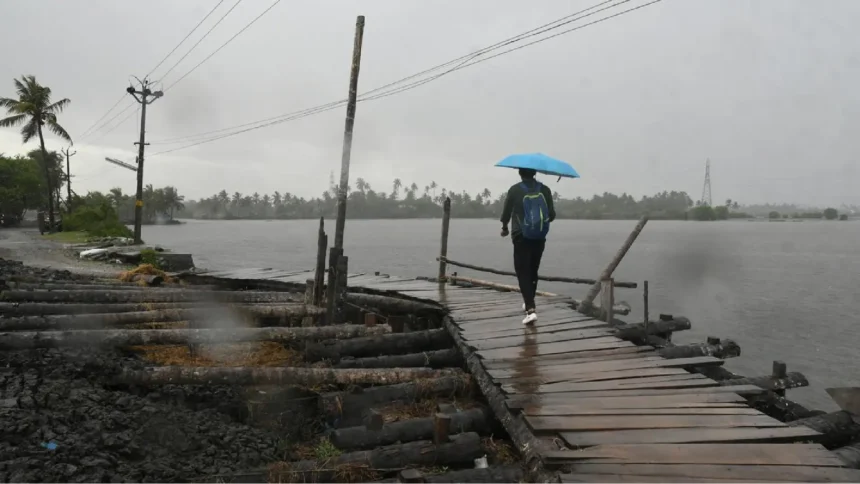
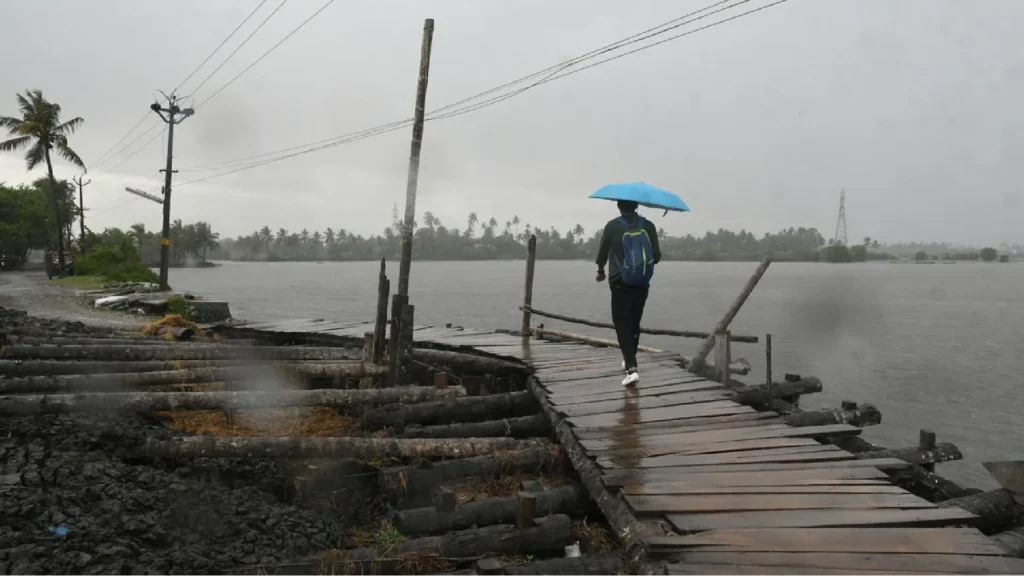
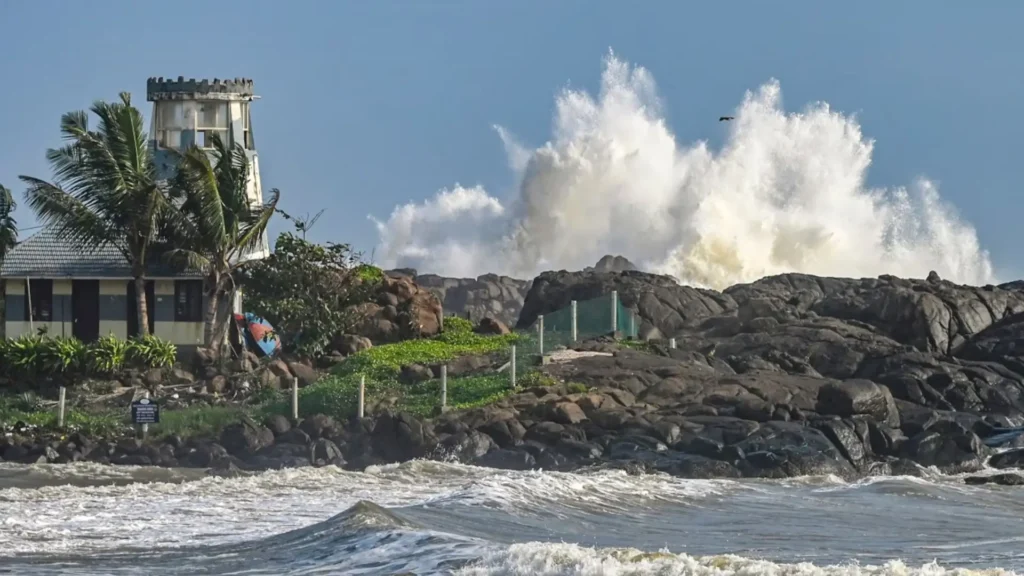
The monsoon’s entry into the country has been delayed. The Meteorological Department reported on Friday that due to a low pressure area over Sri Lanka and stormy winds, the monsoon has been stuck 30-35 km off the Kerala coast for five days and is unlikely to advance further for the next two to three days.
The normal date for the monsoon to reach the Kerala coast is June 1st. Previously, the Meteorological Department had predicted the monsoon’s arrival by May 26th. According to the latest forecast, it will now reach the Kerala coast seven days later. This means the monsoon will enter the country approximately 10 days later than previously predicted.
According to IMD, heatwaves are also expected in June- July in MP, UP, Haryana, Punjab, Bihar, Odisha, Chhattisgarh, Andhra Pradesh, and Gujarat. Temperatures typically hover around 30-35 degrees Celsius during this time. This time, temperatures will be 3 degrees higher.
The Meteorological Department has stated that the country is expected to receive an average of 78 centimeters of rainfall this year, which is about 10% less than normal. On April 13, the forecast was 80 centimeters. Based on data from 1971-2020, the average rainfall in the country is considered to be 87 centimeters.
MP, UP and Bihar to receive less rainfall in June
The Meteorological Department said that Madhya Pradesh, Uttar Pradesh, Bihar, and Jharkhand will receive below-normal rainfall in June, while Maharashtra, Rajasthan, and parts of Gujarat are expected to receive normal rainfall.

Low rainfall impacts on agriculture
The Meteorological Department has reported that this year, the core monsoon zone will receive less rainfall. Agriculture in this region is highly dependent on monsoon rains. This means that rainfall directly impacts crops and food production.
The monsoon core zone includes Madhya Pradesh, Chhattisgarh, Vidarbha region of Maharashtra, Jharkhand, Odisha, Telangana, and parts of Uttar Pradesh and Bihar. Impacts on agriculture here will directly harm farmers.
Impact of less rainfall on common man
About 75% of the country’s total rainfall occurs during the monsoon season, which is crucial for irrigation, drinking water, and power generation.
About 64% of the population depends on agriculture. Only 55% of cultivable land is covered by irrigation.
Deficient rainfall will impact Kharif season sowing, crop production, and overall agricultural activities, increasing both costs and risks for farmers.
Deficient rainfall may reduce production, which will impact supply and increase prices of food items, including vegetables and pulses.
Read more: No relief for ‘Cockroach Janata Party’, Delhi High Court refuses to immediately restore X account
Edited by: Bhoomi Goyal